Monday, June 30, 2025

This worrying Bluetooth security flaw could let hackers spy on your device via microphone

  • Security researchers found three medium-severity flaws in Bluetooth SoCs
  • When chained, they can be used to eavesdrop on conversations, and more
  • Patches are being developed, so be on your guard

Security researchers have uncovered three vulnerabilities in a Bluetooth chipset present in dozens of devices from multiple manufacturers.

The vulnerabilities, they say, can be exploited to eavesdrop on people’s conversations, steal call history and contacts information, and possibly even deploy malware on vulnerable devices.

However, exploiting the flaws for these purposes is quite difficult, so practical implementation of the bugs remains rather debatable.

Get 55% off Incogni's Data Removal service with code TECHRADAR

Wipe your personal data off the internet with the Incogni data removal service. Stop identity thieves
and protect your privacy from unwanted spam and scam calls.View Deal

Difficult to pull off

Security researchers ERNW recently found three flaws in the Airoha system on a chip (SoC), apparently “widely used” in True Wireless Stereo (TWS) earbuds.

The SoC is allegedly present in 29 devices from different manufacturers, including a couple of high-profile names: Beyerdynamic, Bose, Sony, Marshall, Jabra, JBL, Jlab, EarisMax, MoerLabs, and Teufel. Speakers, earbuds, headphones, and wireless microphones all seem to be affected.

The bugs are now tracked under these CVEs:

CVE-2025-20700 (6.7/10) - missing authentication for GATT services
CVE-2025-20701 (6.7/10) - missing authentication for Bluetooth BR/EDR
CVE-2025-20702 (7.5/10) - critical capabilities of a custom protocol

The researchers said that a threat actor with a rather high technical skill set could, if they are within Bluetooth range, pull off an attack and hijack the connection between the phone and the Bluetooth device.

They could then issue different commands to the phone, including initiating or receiving calls, or retrieving the phone’s call history and contacts.

They could also “successfully eavesdrop on conversations or sounds within earshot of the phone," they said. Ultimately, they said it was possible to rewrite the device’s firmware and thus deploy different malware variants.

But the attacks are difficult to pull off, which could mean that only advanced adversaries, such as state-sponsored threat actors, might try to abuse the flaws. In any case, Airoha released an updated SDK with a set of mitigations, which the manufacturers now started turning into patches.

Via BleepingComputer

You might also like


source https://www.techradar.com/pro/security/this-worrying-bluetooth-security-flaw-could-let-hackers-spy-on-your-device-via-microphone

Is Android the new kingmaker in the retail Point-of-Sales market?

We are living through one of the most significant shifts in retail point-of-sale (POS) technology since the introduction of the chip-and-PIN terminal.

After years of relying on rubber-buttoned, specialist PEDs (PIN Entry Devices) from manufacturers like Ingenico and Verifone, the retail sector is now embracing generic Android devices that accept payments using downloadable software.

This shift is more than a change in hardware—it’s a full-blown operating system revolution. But as Android becomes increasingly embedded in our in-store shopping experiences, a bigger question looms: are we handing over control of this multi-billion-dollar ecosystem to a single platform? Is Android now the new kingmaker in retail POS?

From Proprietary Hardware to Programmable Platforms

Until recently, the POS hardware market was tightly controlled. Devices ran customized versions of Linux, and software applications were typically monolithic, expensive to build, and hard to update. Developing or modifying software on these systems required specialist engineering skills, long certification cycles, and intimate knowledge of closed systems.

Innovation under this model was stifled. Only the boldest players attempted to build their own apps for PEDs—and many failed. As a result, the pace of progress in in-store payment gateways lagged behind online and mobile commerce, where new features and updates could be deployed instantly.

That legacy model is now crumbling. Android, originally developed for smartphones, is increasingly used to power POS devices that are more flexible, easier to develop for, and significantly cheaper to deploy. This has paved the way for a new era of programmable retail terminals that run on open platforms and offer the same agility as app-based ecosystems.

The Rise of Android POS

Over the past 18 months, we’ve seen a surge in software-only payment services from major fintech players. Stripe introduced its Stripe Reader S700, which not only processes payments but also runs custom business apps, giving merchants the ability to fully customize the checkout experience. Revolut has also launched its own Android-based retail POS terminal designed for high-speed environments.

This shift is being driven by Android’s flexibility. The OS runs on everything from ruggedized tablets used in queue-busting or pay-at-table scenarios to consumer-grade phones used by mobile merchants. Android has already displaced Windows-based till systems in many cafes, bars, and restaurants due to its lower cost and broader developer base.

This transformation isn’t limited to startups or small merchants. Large-scale retailers and payment providers are building their own custom apps using Android, allowing them to tailor checkout flows to their exact operational needs. At the same time, the smallest merchants—like plumbers or stallholders—can now download a basic Android app to accept payments on their personal phones, with no extra hardware required.

Projections suggest this is only the beginning. The global Android POS market was valued at $7 billion in 2024 and is forecast to grow at a CAGR of 29.4%, reaching over $71 billion by 2033. The low licensing costs, massive developer pool, and ability to create customized hardware configurations all make Android the preferred choice over Apple or Windows alternatives in the retail world.

Specialist SaaS providers like Toast are already bundling Android devices with vertical-specific software tailored to restaurants, and other niche segments. As Android continues to expand its footprint, its influence on the hardware ecosystem is undeniable.

But Who Really Holds the Power?

Despite Android’s rapid ascent, the notion that it is becoming the “kingmaker” in POS is flawed. In reality, merchants aren’t choosing operating systems—they’re choosing the SaaS platforms that best meet their business needs. These platforms, not the OS, will ultimately determine which hardware gets deployed, how app stores are curated, and how secure the payment environment is.

Android simply enables more flexibility. It gives SaaS providers the tools to innovate—whether by enabling tap-to-pay on a handheld device or deploying self-checkout kiosks in fast food restaurants. The OS is the enabler, but the strategic control lies with the platform operators.

What we are witnessing is the fragmentation of the POS landscape into a marketplace of thousands of SaaS providers, each making their own decisions about hardware, app design, and consumer experience. These platforms vary not just by country or language, but by sector. A fast-fashion retailer and a sports store may both sell clothes, but the software they use to manage inventory, payments, and loyalty programs can be vastly different.

This market diversity means that no single OS—Android included—can dictate how the retail world functions. The analogy to Nokia’s decline is striking. Just as Android and Apple reshaped the smartphone industry by empowering app developers and creating open ecosystems, they are now unlocking similar creativity and value in physical retail.

What follows could be a renaissance in the in-store experience. With open systems and software-based interfaces, retailers are no longer tied to generic, inflexible terminals. They can experiment, personalize, and streamline—making checkout faster, more intuitive, and more aligned to their brand.

Android Is the Platform, Not the Power

Android is clearly becoming the operating system of choice for the next generation of POS devices. Its versatility, affordability, and openness make it a natural successor to the locked-down Linux boxes of the past. But that doesn’t mean Android is the new kingmaker.

The real power will lie with the SaaS platforms that orchestrate the entire merchant experience—from inventory and customer engagement to payments and reporting. These platforms are the new center of gravity in retail, and they will continue to shape how we shop in-store.

So yes, Android may well be the plumbing of the new POS world—but it’s the platforms that will design the taps.

We list the best POS system for restaurants and bars. We've also listed the best pizza restaurant POS system.

This article was produced as part of TechRadarPro's Expert Insights channel where we feature the best and brightest minds in the technology industry today. The views expressed here are those of the author and are not necessarily those of TechRadarPro or Future plc. If you are interested in contributing find out more here: https://www.techradar.com/news/submit-your-story-to-techradar-pro


source https://www.techradar.com/pro/is-android-the-new-kingmaker-in-the-retail-point-of-sales-market

Time’s up for Teams: Why the end of Teams Classic support demands immediate enterprise action

Many companies, including some of the UK’s largest banks, major retailers, and government departments, are still grappling with the fallout from legacy software. Compatibility issues and security risks tied to aging platforms remain widespread. This familiar pattern means migration projects are often postponed until the last minute, increasing the risk of costly disruptions and avoidable security vulnerabilities.

Microsoft’s decision to end support for Microsoft Teams Classic on 1st July is more than just a routine update deadline; it represents a critical juncture for enterprise IT teams. For many organizations, this is a firm cutoff with serious operational and security implications.

Stopgap measures bring their own challenges

The impact of these delays is already evident. Many enterprises are paying for Extended Security Updates (ESUs) to buy extra time, while others are accelerating hardware refresh cycles, replacing laptops and desktops earlier than planned just to keep pace. Yet these stopgap measures bring their own challenges. Rushed rollouts often trigger user frustration, operational hiccups, and technical setbacks, complicating what should be a straightforward upgrade.

Security concerns are particularly acute. Recent breaches at major UK retailers such as Marks & Spencer and the Co-op were directly linked to weaknesses in legacy systems. These incidents underline a stark reality that running unsupported software is a liability that can have serious consequences for both security and reputation.

Windows 10 complications

The October deadline for Windows 10 support compounds the challenge. While Microsoft will continue offering paid ESUs for Windows 10, these only provide a temporary patch rather than a long-term solution. Organizations relying on extended support risk developing a false sense of security. Without a full platform upgrade, vulnerabilities pile up, documentation becomes obsolete, and the loss of staff familiar with legacy systems makes future migrations more complex and expensive.

For IT teams facing the double challenge of migrating both Teams and Windows 10 within months, the situation is stressful. Budgets are tight, resources limited, and the window to complete a compliant and smooth transition is rapidly closing.

Often, delaying migration comes down to competing priorities, constrained budgets, and a lack of clear understanding about how legacy systems interact with current business processes. Legacy environments are typically poorly documented, and over time, institutional knowledge is lost as experienced staff leave. This makes migration projects time-consuming and costly, not only in terms of software upgrades but also in mapping the impact on security and compliance.

Postponing these migrations carries hidden costs too. Every month that passes increases the risk of security breaches, operational failures, and regulatory penalties. Delaying upgrades becomes an increasingly risky gamble.

Successfully navigating this challenge

Successfully navigating this challenge demands urgent action and careful planning. One lesson from past migrations is clear in that scheduling rollouts thoughtfully and having robust rollback alternatives in place are crucial to minimize disruption. The old adage “plan for success but prepare for failure” rings especially true here. Working closely with users throughout the process helps manage expectations and surface issues early on.

Another key priority is capturing institutional knowledge before critical staff move on. Documenting legacy configurations, workflows, and vendor agreements is vital to maintain continuity and enable effective troubleshooting during migration. Testing compatibility thoroughly in controlled environments is also crucial to spot potential problems before they affect users. Planning phased rollouts with clear fallback procedures helps manage risk and keeps disruptions to a minimum.

At the same time, clear communication and user training can’t be overlooked. Engaging with end users early reduces resistance and confusion, helping teams adapt smoothly to the new platform without unnecessary setbacks.

End of support

The end of Teams Classic support should serve as a clear warning that last-minute fixes and reliance on extended support aren’t sustainable. In an era where digital transformation and cyber threats are accelerating, organizations need to take control of their technology lifecycles. Early, comprehensive planning combined with cross-team collaboration is the only way to ensure timely migration while maintaining security and operational stability.

Those organizations that act now will not only meet critical deadlines but will also reduce risks and build resilience for the future. For those that continue to delay, the risks of costly disruptions, breaches, and compliance failures will only grow.

With time running out on both Teams Classic and Windows 10 support, the path forward requires decisive, well-coordinated action to safeguard security and prepare organizations for the challenges ahead.

We've compiled a list of the best patch management software.

This article was produced as part of TechRadarPro's Expert Insights channel where we feature the best and brightest minds in the technology industry today. The views expressed here are those of the author and are not necessarily those of TechRadarPro or Future plc. If you are interested in contributing find out more here: https://www.techradar.com/news/submit-your-story-to-techradar-pro


source https://www.techradar.com/pro/times-up-for-teams-why-the-end-of-teams-classic-support-demands-immediate-enterprise-action

Sunday, June 29, 2025

I tried to make an immersive smart lighting gaming desk setup and failed horribly – here's why

I wouldn't call myself a flashy person, but when it comes to smart lighting, I'm prepared to go all-out. In my home, I'm using everything from standing lamps like Philips Hue's Signe gradient lamp and TV backlight to the Govee Table Lamp 2 to give my home lighting some pizzazz.

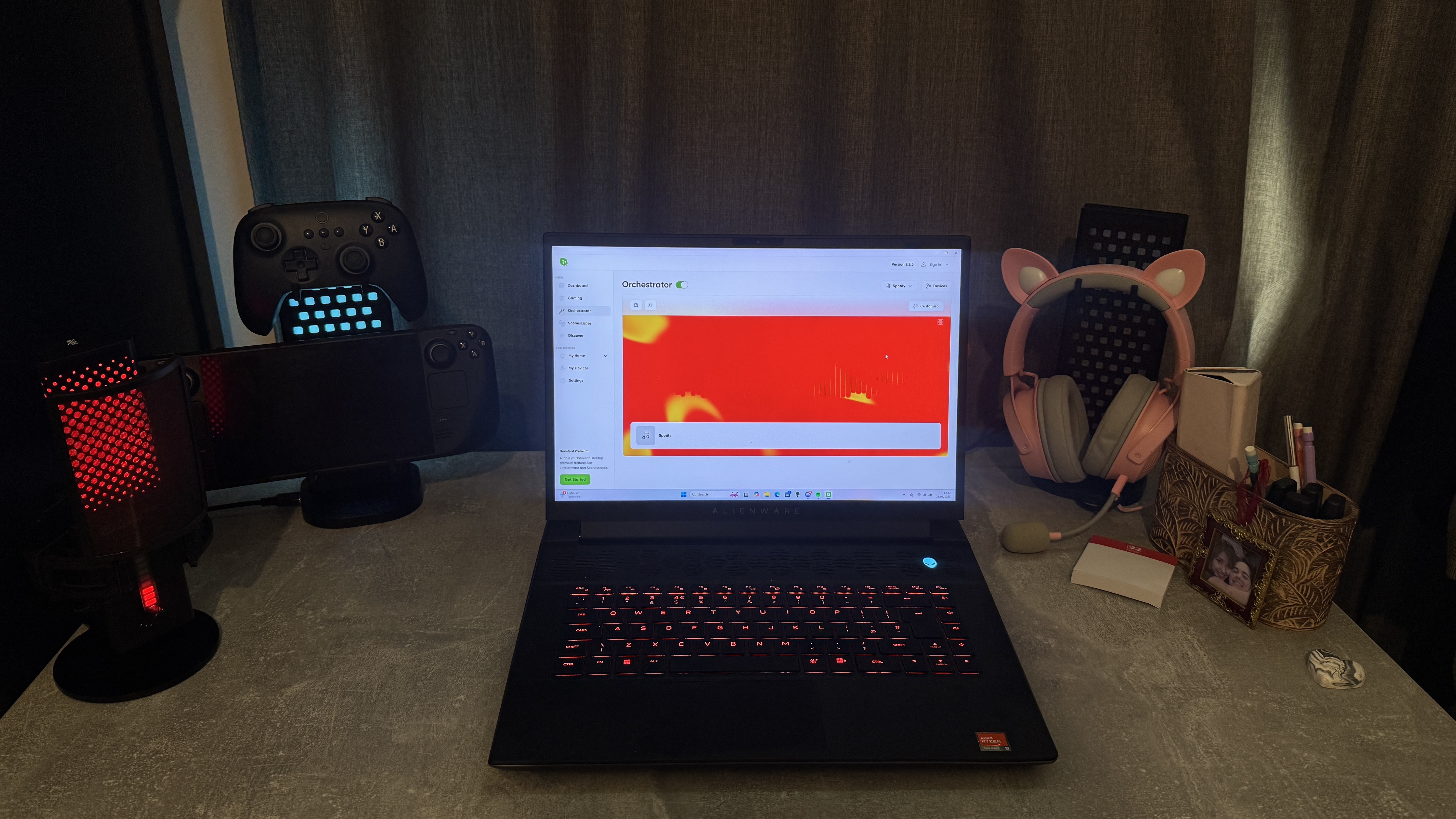
Until recently, my setup included my beloved Nanoleaf black hexagon wall panels, which served both as traditional and immersive smart lighting when hooked up to my PC via the Nanoleaf Desktop app, in addition to the remote controls afforded by the mobile app. Unfortunately, my new digs don't afford me the wallspace for these, so I was excited to see if Nanoleaf's latest gaming release, the Pegboard Desk Dock, would suitably fill the RGB-shaped void in my life.

Would that it were so simple.

I didn't peg you as a quitter

I'm in the throes of reviewing Nanoleaf's Pegboard Desk Dock, so this is far from a final verdict, but my early impressions tell a cautionary tale for all immersive lighting enthusiasts. This 3-in-1 smart light and desktop combo is an awesome concept; smartly designed, arriving with four hooks each, which can be arranged on the Pegboard to hold your gaming controllers, handheld PCs, and headsets. If you'd rather just have the Pegboard as a display piece, you can easily pull it out of the base and turn it around to show the rear light panel.

For me, this was a dream product. I'm always looking for ways to optimize my desk space, especially since I downsized when moving home, and I love Nanoleaf's wider range of smart lights.

So, after eagerly unboxing and setting up my new lights, I was eager to see my new setup in all its glory. Just watching the lights cycle through the colors of the rainbow before I'd even paired them with Nanoleaf's software was exciting enough.

Unlike many of Nanoleaf's other products, however, the Pegboard can't be added to the Nanoleaf mobile app; it works exclusively within the Nanoleaf Desktop app, and that's where my first problem came in.

While the lights' basic settings worked just fine when unpaired, as soon as I connected them to the app and tried to change their color output, they ceased to function, flashing on and off sporadically, rejecting any peripherals I plugged into the base and intermittently appearing as "Unreachable" within the Nanoleaf app.

I'd thought it was perhaps because they needed more power, so I plugged in my power supply; no joy. The software also offers little troubleshooting for the problem, and with everything running smoothly until the point I tried to pair them, I've come up short trying to fix them myself. I've yet to contact Nanoleaf about the issue, which I'll surely do before I give my final verdict, and I'm more than certain that a resolution exists; however, my experience paints a broader picture of immersive smart home lighting challenges.

It was at this moment I knew it was all going very wrong

(Image credit: Future)

Bigger fish to fry

I don't relish bemoaning the woeful state of smart home interoperability once again. The simple fact is, it's everyone's biggest problem, and that's not exclusive to smart lighting for the home; any smart home brand taking the walled garden approach, of which there are many, earns my ire in the age of Matter compatibility.

Gaming lights, in particular, suffer. On my gaming laptop, I've got a plethora of RGB and smart light controlling apps; Logitech G Hub, HyperX NGENUITY, Corsair iCUE, Razer Chroma, and Nanoleaf being the ones I used for this setup.

Now, some of these play nice with each other; namely, Nanoleaf links up to both Corsair iCUE and Razer Chroma, but that still leaves half of my peripherals setup disconnected. You're also at the mercy of software updates, which, especially if you use a hub app with multiple platforms connected to it, can make or break your setup.

There's also the non-small issue of the software itself. Running these background apps, especially if you aren't able to whittle them down by integrating different platforms, can use a fair bit of CPU and RAM. Especially if you're playing on a more lightweight machine, that can end up being pretty detrimental for high-stakes gaming.

Not all hope is lost when it comes to immersive smart lighting, though. Software like SignalRGB and OpenRGB goes a long way to mitigate compatibility problems, even if these are far from perfect. Still, things are heading in the right direction, just at a glacial pace – and if smart light makers want to light up the lives of gamers the world over, that will need to change to keep up with the sophisticated interfaces and experiences we're used to from our tech.

Even when it comes to immersive lighting for the TV, you can bet things are never simple. Screen extending lighting is increasingly popular, yet your options these days are limited; splurge on a pricey Philips Ambilight TV, opt for the still-pricey Hue light strip and sync box (which requires HDMI input and thus won't work with cable TV or built-in Smart TV software) or opt for a product like Nanoleaf 4D or Govee Ambient TV backlight, which points a camera at your screen to detect the action, will invariably have some small input lag.

My best advice? Stick with as many products from one light maker as possible, and for PC gaming, that will, in all likelihood, be a peripherals manufacturer with more focus on the RGB than the smart lighting of it all.

Want to start your own smart lighting setup? Shop my favorites below!

You might also like...


source https://www.techradar.com/tech/i-tried-to-make-an-immersive-smart-lighting-gaming-desk-setup-and-failed-horribly-heres-why

Saturday, June 28, 2025

Apple could finally go all-screen with the iPad Pro, as new leak hints at slimmest-ever bezels

  • Upcoming iPad Pro rumored to have slimmest bezels to date
  • Change could come from adoption of LG chip-on-film OLED panel
  • Timeline for the redesign remains unclear

Apple’s iPad Pro could be set for an even slicker design. A new rumor suggests the next-generation OLED iPad Pro will have the slimmest bezels of any Apple tablet to date – bringing it closer than ever to a true edge-to-edge display experience.

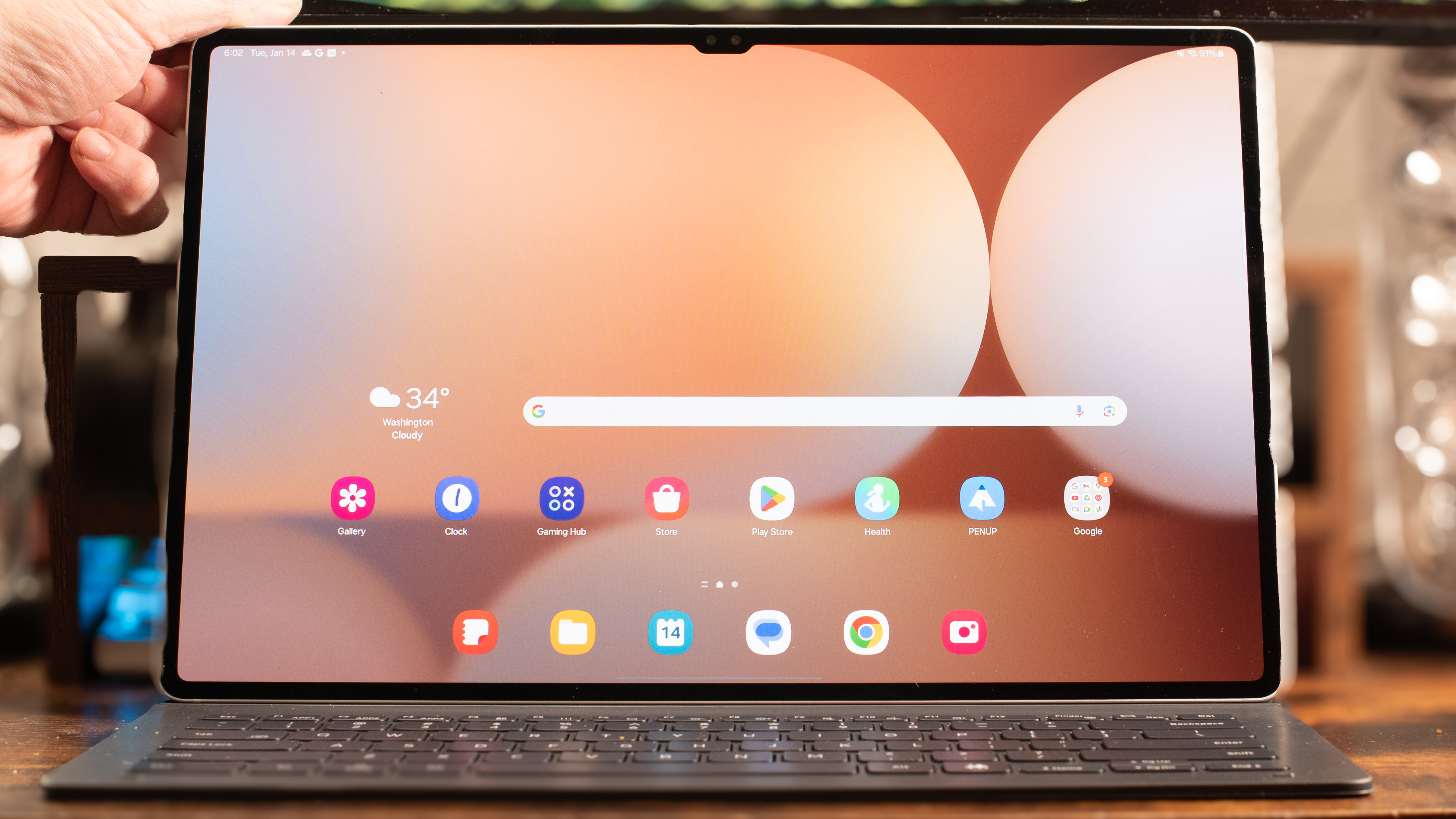
According to a post on Chinese social media platform Weibo, upcoming models of the iPad Pro will have bezels similar in width to the Samsung Galaxy Tab S10 Ultra. The information was shared by Instant Digital, an established leaker with more than 1.4 million followers.

The post also suggests that Apple has figured out how to reduce the width of the borders around the iPad display without introducing a notch, like the one found on the Galaxy Tab S10 Ultra. That tablet already has a screen-to-body ratio of more than 90%. Without a notch, the redesigned iPad Pro line would be firmly in all-screen territory.

Exciting as this latest iPad display rumor is, it also raises a lot of questions – and leaves many of them unanswered.

A borderless future?

Samsung Galaxy Tab S10 Ultra attached to keyboard

The Samsung Galaxy Tab S10 Ultra doesn't have much in the way of bezels (Image credit: Philip Berne / Future)

We’ve heard rumors about ultra-slim iPad Pro bezels before, some of which came from the very same source. While Instant Digital has accurately leaked some Apple specs ahead of time, the account has also had its share of misses. That gives cause to take the suggestions with a pinch of skepticism.

Still, developing a tablet with ultra-sim bezels certainly seems like something within the Apple wheelhouse. And if there’s one device Apple loves to show off its design chops with, it’s the iPad Pro. From mini-LED panels to Apple Pencil hover support, the Pro line has long been a playground for premium features.

The move would require a reconfiguration of the internal hardware, particularly in relation to the display. Recent reports suggest part of the answer could come from chip-on-film technology, which LG will reportedly use to make integrated OLED panels for future iPad Pro models.

With slim bezels and no notch, Apple will still need somewhere to hide the front-facing camera and TrueDepth sensor system required for Face ID. When it removed the notch from the iPhone 14 Pro, Apple introduced the Dynamic Island. One option could be to bring this feature over to the iPad Pro lineup.

An alternative solution would be under-display sensors. We’ve seen these on other devices. The Samsung Galaxy Z Fold range, including the latest Z Fold 6, has long been equipped with under-display cameras. We’ve also written about a recent Apple patent for an under-display Face ID system. This suggests that Apple is working on a way to eradicate notches from its iPhone range – and the technology could certainly be extended to its tablets.

Perhaps the most pressing question is when all of this will actually come about. The Weibo post makes clear that arrival point of the redesign is ‘not necessarily the next generation’.

The current iPad Pro (2024) launched in May 2024. The next-generation iPad Pro is expected to land late in 2025 with an M5 processor. As much as we’d like to see an all-screen iPad this year, it seems more realistic to hedge our bets and wait for slimmer bezels on the following generation – likely due in the first half of 2027.

You might also like...


source https://www.techradar.com/tablets/ipad-pro/apple-could-finally-go-all-screen-with-the-ipad-pro-as-new-leak-hints-at-slimmest-ever-bezels

Millions of Windows 10 business devices haven't been updated to Windows 11, says survey - here's what you should do to secure yours

  • Enterprise readiness for Windows 11 is improving but still uneven, says new report
  • Healthcare and finance sectors lag in upgrading outdated hardware
  • Migration is slowest in Americas despite most devices being upgrade-ready

Millions of enterprise devices are still running Windows 10, even as Microsoft’s deadline to end support for the OS approaches.

According to ControlUp’s latest Windows 11 Readiness report, half of all business-managed Windows devices have not yet made the switch.

That number reflects progress from last year, when over 80% of enterprise machines were still on Windows 10, but with support ending on October 14, 2025, time is running out for organizations still lagging behind.

Wide variation across industries

“While the 50% completion mark is a major milestone, it's not time to relax,” said Marcel Calef, Americas Field CTO at ControlUp. “Many enterprises still face hardware and planning challenges.”

The report analyzed over one million devices and found wide variation across industries.

Education and tech lead the way, with over 70% of systems upgraded. Healthcare and finance trail far behind, with fewer than half of their devices running Windows 11. Some healthcare devices are simply too old, with 19% needing replacement before an upgrade is possible.

Regional trends show the Americas are the slowest to move forward. Just 43% of enterprise devices there have upgraded, compared to 70% in Europe.

Notably, most of the un-upgraded machines in the Americas are technically capable of running Windows 11, but the switch hasn’t been made.

Larger organizations are also behind. Those managing more than 10,000 Windows devices have completed just 42% of migrations. Complex environments and aging infrastructure are slowing progress.

If your business still uses Windows 10, it’s time to take action. Start by checking which devices meet Windows 11’s requirements, like TPM 2.0 and Secure Boot. Replace what can’t be upgraded, and plan phased updates for the rest. Prioritize high-risk devices, back up data, and keep systems patched during the transition.

If upgrading isn’t possible, reduce risk by limiting access to sensitive systems, enabling built-in protections, and isolating outdated devices. Make sure all updates are current and that you're running the best antivirus software and best malware protection.

Microsoft is fully aware that the deadline is bad news for a lot of companies and is offering paid support through its Extended Security Updates (ESU) program, open to individuals and organizations. It isn't cheap of course.

Third-party provider 0patch also plans to deliver security fixes for at least five years after Microsoft ends support.

You might also like


source https://www.techradar.com/pro/millions-of-windows-10-business-devices-havent-been-updated-to-windows-11-says-survey-heres-what-you-should-do-to-secure-yours

Mr Hamza, Mysterious Team Bangladesh, and Keynous+ led a massive surge in DDoS on US businesses following an attack on Iran

  • Mr. Hamza claimed over half the strikes in a coordinated wave of digital retaliation
  • Hacktivists redirected fury from Israel to America in a stunning 48-hour escalation
  • U.S. military-linked manufacturers became primary targets in a pointed cyber warning shot

An abrupt and massive rise in Distributed Denial of Service (DDoS) attacks against U.S. businesses has coincided with Washington’s involvement in the Israel-Iran conflict.

According to Radware’s Director of Threat Intelligence, Pascal Geenens, between June 21 and 22, 2025, hacktivist-led DDoS claims surged by 800%.

This dramatic increase was paralleled by a 900% drop in attacks against Israel, suggesting a deliberate redirection of focus away from Israel and toward its most prominent ally.

Key groups behind the DDoS escalation

The spike in cyber hostility has been attributed largely to the actions of a few specific threat groups.

Mr. Hamza, a hacktivist group known for its cyberattacks, was responsible for more than half of the claimed attacks in the U.S., while Mysterious Team Bangladesh and Keynous+ each claimed responsibility for over 17%.

The presence of other smaller groups, such as Team Fearless (PS), further indicates a broad, if loosely organized, coalition acting on a shared political motivation.

Radware’s data suggests this alignment stems more from anti-U.S. sentiment over its stance in the Middle Eastern conflict than from any centralized coordination.

Crucially, the sectors targeted during the June 22 escalation included manufacturing, finance, and government.

Manufacturing stood out not only in terms of volume but also in its specificity, with many of the victims tied to military and aerospace production.

This pattern points to more than random disruption, it reflects a calculated effort to destabilize core defense and economic infrastructures.

“Notably, many of the manufacturing-related targets were linked to military and defense production, particularly companies involved in air defense and aerospace systems,” Geenens emphasized.

The nature of DDoS attacks makes it difficult to determine long-term strategic intentions, but their use as a disruptive tool is clear.

Hacktivist-driven campaigns have historically served as early warnings of more sustained or damaging attacks.

These assaults are therefore more than digital noise, they may well foreshadow deeper incursions.

Companies that rely on online operations, from government contractors to sellers using ecommerce platforms, must strengthen their cyber resilience.

For those building new online storefronts using ecommerce website builders, security protocols now require as much attention as usability or design.

As a result, choosing providers that offer the best DDoS protection is no longer a matter of precaution but a necessity.

You might also like


source https://www.techradar.com/pro/security/mr-hamza-mysterious-team-bangladesh-and-keynous-led-a-massive-surge-in-ddos-on-us-businesses-following-an-attack-on-iran

Friday, June 27, 2025

Nvidia could use humanoid robots to build AI servers in Foxconn's US factory - but I wonder where these robots will be built

  • Foxconn is preparing robots to perform manual tasks such as cable insertion and part assembly
  • Nvidia may become the first to use humanoid robots in its AI server production line
  • Foxconn’s Houston factory was selected for its larger space and adaptable new layout design

Foxconn and Nvidia are reportedly discussing plans to deploy humanoid robots at a new AI server production facility in Houston.

If implemented, this would be the first time humanoids are used in the assembly of Nvidia products and Foxconn’s first AI server line to incorporate them.

Sources familiar with the matter, who declined to be named, told Reuters the deployment could be finalized soon, with operations possibly beginning in the first quarter of 2026.

New factory layout makes robotics more feasible

Houston was considered a strategic choice due to its new facility design and greater available space compared to existing AI server manufacturing sites.

However, neither Nvidia nor Foxconn has officially confirmed the plan, but the reports align with both companies’ growing interest in automation and robotics, particularly in areas that demand speed and flexibility, like AI server production.

Foxconn has been developing its own humanoid robots through its subsidiary Foxconn Industrial Internet and is also training robots to do basic tasks like cable insertion, object placement, and light assembly work.

At a recent event in Taipei, Leo Guo, general manager of the company's robotics division, revealed that two types of robots will be showcased in November 2025.

One version has legs, while the other is mounted on a wheeled autonomous mobile base, which Guo said “would cost less than the version with legs,” though he declined to share specific figures.

Nvidia, for its part, has a strong stake in the humanoid robotics field, as it supplies the AI platforms used by many developers to create humanoid machines.

At its recent Nvidia GTC 2025 event, CEO Jensen Huang stated the widespread use of such robots in manufacturing was “less than five years away.”

Nvidia’s broader plans in Texas include a second partnership in Dallas with Wistron, and both sites are expected to begin production within 12 to 15 months.

Still, one unanswered question lingers: if Nvidia is pushing for humanoid robots in the US, where exactly will these robots be built?

Foxconn may turn to Taiwan, where its robotics unit is based, or to China, where it operates large-scale factories and has previously collaborated with UBTech.

Vietnam and India are also plausible choices, given Foxconn’s ongoing expansion in those countries to reduce production costs.

Alternatively, the company could outsource components to established robotics manufacturers in Japan or South Korea, where the technology is more advanced and well-established.

While the United States could be considered for localized production, this is likely part of a longer-term strategy.

This key detail will determine how scalable the approach is and whether the future of automated manufacturing will rely on global supply chains or more localized development.

You might also like


source https://www.techradar.com/pro/nvidia-could-use-humanoid-robots-to-build-ai-servers-in-foxconns-us-factory-but-i-wonder-where-these-robots-will-be-built

This ‘meh’ iPhone 17 Air camera tip might give us more insight than meets the eye

  • A 'leaked' image shows a screen protector for the iPhone 17 family
  • And the iPhone 17 Air has a standout change with a left-oriented selfie camera
  • This dull tip could hint at more than meets the eye

The iPhone 17 Air has been tipped to have a front-facing camera on the left-hand side of the Dynamic Island that the rumored super-slim phone is expected to have.

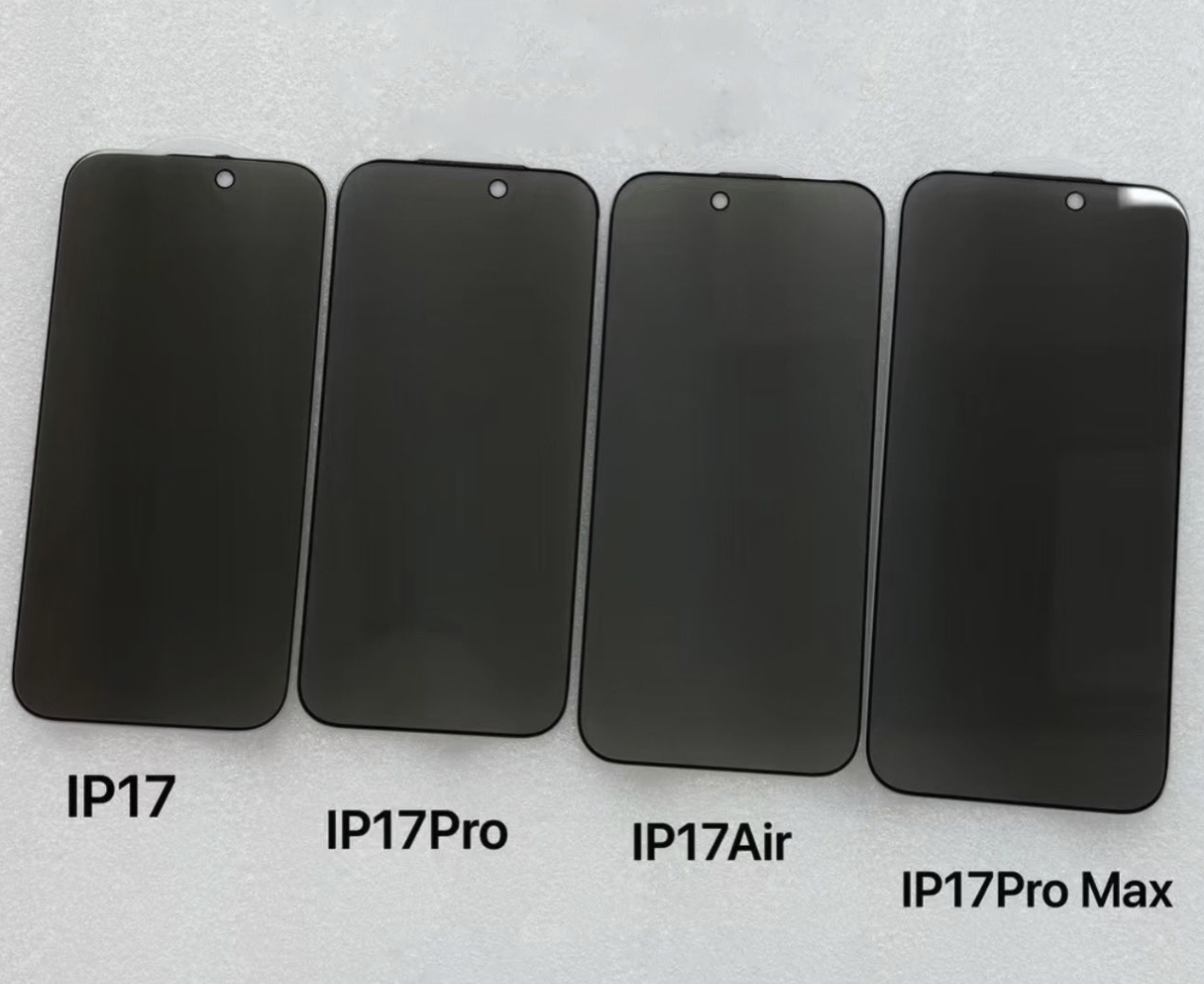
This comes courtesy of tipster Majin Bu, who has a habit of surfacing claimed leaks taken from Chinese social media on X, often with a mixed track record of accuracy. Bu posted an image of screen protectors that are supposedly for the iPhone 17 lineup.

These images are hardly dynamic and don't hint at big design changes for the next-generation iPhones. But for an image labelled 'IP17Air', the front-facing camera has been shifted from the right-hand side of the Dynamic Island (as seen on the iPhone 16 models and expected for their next-gen counterparts) to the left.

Claimed images of iPhone 17 model cases

(Image credit: Majin Bu/X)

Now, before you yawn yourself off this article, let me explain why it could be more interesting than you think.

Moving a camera isn't a big deal, especially as Apple would likely make sure iOS 26 takes this into account when using the likes of the reworked camera app to snap selfies and so on.

But Apple tends to rarely do things for the sake of it or just for a bit of design flair. Rather, I think this change could be a clue as to how Cupertino might have reworked the internal layout of its iPhones to produce a super-slim variant of a next-gen Apple phone.

Formula iPhone

Brad Pitt looks over his right shoulder with 'F1' written behind him

(Image credit: Apple TV+)

If you happen to follow Formula One – which, as it happens, Apple has made a movie about – you'll know that how components in an F1 car are packaged is vital to getting the most performance out of a car; in terms of aerodynamics, weight distribution, weight, and so on. The rules of F1 mean that there are limitations to how much can be changed with each team's car to ensure that one doesn't have an unfair advantage over the others.

And I think the same logic can be applied from an F1 car to making super-slim phones, well, to an extent, so bear with me.

This is because consumers have certain expectations from phones – especially those from the biggest brands – such as decent performance, rear- and front-facing cameras, a solid battery life, and a decent display. And given phones have basically got somewhat iterative generation-to-generation, there are arguably limitations to what can be done to make a phone slim and light without too many compromises.

As such, this tipped camera reposition in the Dynamic Island is a potential hint that Apple is working to package the internal components and structures of the iPhone 17 Air in such a way as to make it seriously slim.

Given Samsung beat Apple to the punch with the Galaxy S25 Edge, I think Tim Cook's crew will need something special to stand out and avoid being slated for following in its rival's footsteps instead of leading.

Of course, the iPhone 17 Air could still be rumor and speculation, with screen protector makers reacting to the tips rather than any official design. But at this point, a form of iPhone 17 Air seems quite likely; we're sure to find out more come the expected September Apple event.

You might also like


source https://www.techradar.com/phones/iphone/this-meh-iphone-17-air-camera-tip-might-give-us-more-insight-than-meets-the-eye

JCB debuts trio of Android rugged smartphones with midrange features - but I fear it won't be affordable enough to bother rivals

  • JCB’s rugged phone trio enters a saturated market with a price that raises eyebrows
  • JCB Toughphone P20's thermal camera is unique, but won’t matter much to everyday users
  • Midrange specs and premium pricing put the JCB M20 and E10 in a tight spot

JCB has introduced three Android rugged smartphones, targeting field professionals in industries such as construction and logistics.

The most advanced of the trio, the Toughphone P20, arrives with Android 14, a 6.6-inch 120Hz Full HD+ display, and a MediaTek MT6877 chipset coupled with 12GB RAM and 512GB of internal storage, expandable up to 1TB.

But with a launch price of £649 (€649), it lands in a territory already contested by better-known and, in some cases, more affordable rivals.

Niche features may not justify a premium price

On paper, the Toughphone P20 appears to be built to last. Its 10,000mAh battery supports up to 40 hours of talk time and 50 days of standby, while also offering powerbank functionality.

JCB claims it “combines robust hardware with advanced features,” and the device meets IP69K and MIL-STD 810H durability standards.

The drop resistance of up to 1.8 metres and water resistance make it a credible option, but it must contend with phones like the Ulefone Armor 28 Ultra, which boasts similar ruggedness, an even larger battery, and support for Android 15 at a slightly higher cost.

JCB's inclusion of a thermal imaging camera is a niche but welcome feature, using an “uncooled VOx microbolometer” capable of capturing temperatures from -15°C to 550°C with a resolution of 256 x 192 pixels.

The triple rear camera system, 64MP main, 8MP wide-angle, and 20MP night vision, adds versatility, and the 20MP front camera is well above the standard for rugged phones.

However, in the area of software assurance and update longevity, mainstream rivals like the Samsung Galaxy XCover 7 still offer more confidence, especially for enterprise users who value a mature ecosystem.

The Toughphone M20 and E10, which come in at £449 and £249 respectively, cater to mid- and entry-level rugged users, but again, they're priced within reach of alternative options.

The Doogee S200 provides similar specs to the M20 with a huge battery and 5G support, but may come in cheaper, especially from resellers.

Meanwhile, for buyers interested in large screens and aggressive aesthetics, the 8849 Shark 3 competes with its striking design and gaming-inspired rugged build.

JCB markets the P20 as a field-ready tool but it faces stiff competition even among lesser-known brands. The Oukitel WP200 Pro, for instance, blends durability, strong specs, and an average price point, challenging JCB’s efforts to stand out.

Unless JCB can negotiate volume deals to bring the price down significantly, its debut trio may struggle to attract attention beyond niche buyers who already know exactly what they're looking for.

You might also like


source https://www.techradar.com/pro/jcb-debuts-trio-of-android-rugged-smartphones-with-midrange-features-but-i-fear-it-wont-be-affordable-enough-to-bother-rivals

The best TV show on Prime Video? I can’t stop coming back to this comfortingly cringey comedy series from the 2000s

Some TV shows are like comfort food, and for me, there’s no show more comforting than Peep Show. The British sitcom from the early 2000s has been my go-to whenever I don’t know what to watch for quite some time now, and for good reasons.

For the uninitiated, Peep Show follows the miseries of self-doubting, uptight loan manager called Mark Corrigan (David Mitchell), who rents a room in his South London flat to Jeremy Usbourne (Robert Webb), aka Jez, an overconfident and impulsive musician.

Together, they stumble, blindly through day-to-day life, usually ending up in a desperate situation of their own making. There’s something weirdly cozy about watching two awkward flatmates spiral through life’s small humiliations, especially when their internal monologues are so brutally honest – and endlessly quotable.

I’m not ashamed to admit that I often find myself referencing memorable lines from the series. Don’t believe me? Given that I’m writing about a TV show, I can’t help but think about a fitting scene from one of my favorite episodes of the entire series, ‘Seasonal Beatings’ (episode 5 of season 7), where Mark is discussing what to watch next:

"We watched all the Losts and they were… somewhat okay, and Heroes had some interesting themes, but also quite a lot of… not so interesting themes. And Prison Break, by the end I very much wanted to break out of the prison that Prison Break had become for us."

Unlike many other shows, Peep Show isn’t just "somewhat okay". It does have interesting themes and I never want to break out of my habit of streaming it on repeat. Whether you’re discovering it for the first time on one of the best streaming services or rewatching it for the umpteenth time like me, Peep Show remains one of the most unique and rewarding comedies out there.

Why you should (still) watch Peep Show

David Mitchell and Robert eb stand in a flat looking unimpressed

Peep Show is one of the best Prime Video shows in the US and Australia.

The series features some of the best side characters you'll ever meet. From Jez's ‘moreish’ bandmate Super Hans (Matt King) and Mark's ruthless boss Alan Johnson (Paterson Joseph) to Mark's love interests Sophie (Olivia Coleman) and Dobby (Isy Suttie), the supporting cast are every bit as quirky and engaging as the two leads.

Peep Show’s cringe humor often sees the show get compared to another well-loved sitcom you might have heard of: The Office. But while both shows are filled with awkward silences and cringe-inducing lead characters, Peep Show is in a class of its own.

Its humor is more polished (yes, there are moments of chaos but it doesn't turn slapstick), its underlining themes are much darker (in one episode it goes to the “heart of darkness”) and its characters are far more deluded (the show really doesn't hold back on just how much so at times). But at the same time, it’s not doing any of this in a pretentious way.

Indeed, there’s no gloss here. The flats are grim, the jobs are soul-crushing (although one character does get close to the ‘big three’: “museum, lunch and a snooze”), and the dreams are small. But that’s what makes the show so easy to watch, because it doesn’t pretend to be anything grand.

Mark and Jex stare down directly into the camera in an episode of Peep Show

In the UK, Peep Show is one of the best Netflix shows you can stream. (Image credit: Channel 4)

The secondhand embarrassment you feel from the comedy is all amplified by the shaky point-of-view (POV) filming that the show is known for. There's nowhere for the viewer to hide. You see everything up close, making you feel like you're inside the lead characters' heads.

While the filming style is unique, it can also take some getting used to. The first season was very much still finding its (rainbow) rhythm with the POV camerawork, and mounted head cameras to the actors to produce the effect – the quality of the footage these cameras produced was quite low, which is why they're used less later in the series.

Basically, don't skip the first season because you're put off by the video quality; stick with it, because you'll be rewarded with some of the best gags in the series, including one that makes a reappearance in season 5, which you wouldn't otherwise get if you skipped it.

What also makes it such a comforting TV show to stream is that the episodes are short, usually just under 30 minutes, but a lot still happens throughout. Peep Show is the perfect series for short sittings when you need something light to watch because you can easily tune in and out of it.

So what are you waiting for? Pour yourself a massive drink. Turn on the TV and crack open this exceptionally funny show that deserves your attention immediately. Merry Peep Show watching everyone!

Peep Show is available to watch on Prime Video, Hulu and BritBox in the US, as well as some of the best free streaming services, including Pluto TV, Plex and The Roku Channel. Meanwhile, those in the UK can find it on Netflix, while Australians can stream it on Prime Video, BritBox and Stan.

You might also like


source https://www.techradar.com/streaming/amazon-prime-video/the-best-tv-show-on-prime-video-i-cant-stop-coming-back-to-this-comfortingly-cringey-comedy-series-from-the-2000s

Thursday, June 26, 2025

Anker's extraordinary 3D printer has become the most popular campaign ever on Kickstarter, with nearly $45 million pledged

  • Anker EufyMake E1 prints up to 5mm thick textures using UV-curable ink, not filament
  • Over $45 million raised on Kickstarter makes the E1 the most funded project to date
  • EufyMake E1 supports over 300 materials, including metal, leather, and curved surfaces

Anker’s latest foray into creative tools has unexpectedly taken Kickstarter by storm with its new device, the EufyMake E1, generating nearly $45 million in pledges with days still left in its campaign, making it the most funded Kickstarter project to date.

Developed under Anker’s Eufy sub-brand, the E1 is being marketed as the world’s first personal 3D-texture UV printer.

While excitement among backers is undeniable, the real question is whether this all-in-one 3D printer machine can live up to its extraordinary promise.

A different take on home 3D printing

Unlike a typical home 3D printer, the EufyMake E1 doesn’t work with filament to build objects - instead, it uses UV-curable ink and a process Anker calls Amass3D technology to layer ink into textured designs on flat or curved surfaces.

The textures can reach up to 5 mm thick and can be printed on over 300 materials, including glass, leather, metal, and wood.

It also supports cylindrical objects through rotary printing and direct-to-film output for making custom stickers.

From a technical standpoint, the E1 is packed with features, including laser levelers, an 8 MP camera with AI positioning, and the ColorMaestro system that delivers vivid and lasting full-color prints.

The company also promises a hands-off user experience, thanks to the JetClean self-cleaning system.

These extras could appeal to hobbyists and small businesses alike, especially those producing custom merchandise like ornaments, tumblers, or vinyl stickers.

Still, this isn’t just a clever crafting tool; it’s clearly being positioned as a major pitch to the DIY market.

With the EufyMake E1 aiming for the consumer space, questions arise about long-term durability, ink costs, and real-world precision, factors that often separate a gadget from a reliable tool.

Claims of low operating cost, such as, “a dollar’s worth of ink on a custom metal sign,” may sound compelling, but they’ll need to be tested outside of promotional videos.

Ink consumption is a significant consideration for 3D printers. While the EufyMake E1 campaign claims 600 ml yields around 1,000 small prints, there is no detailed ml-per-print data for 3D output.

Considering that an ink set reportedly costs about $299, this means an average user could spend around $0.50 per print, and possibly more depending on the application - and in the long run, it could prove too expensive for small business owners.

Users looking for the best printer for everyday use or even the best laser engraver for material customization may need to compare carefully before committing.

You might also like


source https://www.techradar.com/pro/ankers-extraordinary-3d-printer-has-become-the-most-popular-campaign-ever-on-kickstarter-with-nearly-usd45-million-pledged

Wednesday, June 25, 2025

This Intel Core i7 motherboard is probably the world's most powerful SBC - and yet it is as small as the Raspberry Pi 5


  • de next-RAP8 SBC may be tiny in size, but pushes boundaries in robotics and industrial hardware design
  • Not your average single-board computer, this one runs Intel Core i7 and LPDDR5x memory
  • Add-on modules unlock AI and storage power, but complexity holds it back for offices

AAEON has introduced the de next-RAP8, a single-board computer that combines 13th Gen Intel Core processors with a compact footprint of just 84mm x 55mm.

This makes it similar in size to the Raspberry Pi 5, yet it includes components typically reserved for much larger systems.

The board is available with the Intel Core i3-1315UE, i5-1335UE, or i7-1365UE, each running at 15W.

Designed for robotics and industrial systems

The biggest model delivers up to 10 cores and 12 threads, paired with up to 16GB of LPDDR5x memory and integrated Intel Iris Xe graphics.

These specifications suggest the board could handle lightweight multitasking and media processing, although performance would still be constrained by thermal limits and the lack of a discrete GPU.

While it delivers more performance than typical embedded systems, its layout and expansion capabilities do not match the flexibility expected from workstation PCs.

Its connectivity includes dual Intel RJ-45 Ethernet ports supporting 2.5GbE and 1GbE, two USB 3.2 Gen 2 Type-A ports, HDMI 1.2a output, and a 12V DC jack.

Additional features are accessible through a 40-pin header, which supports 8-bit GPIO, USB 2.0, and RS-232/422/485 interfaces. There is also optional support for SMBus/I2C.

These features suggest the board is intended for integration into custom hardware systems, including drones and robotics platforms.

Further expansion is available via an M.2 2280 M-Key slot for Wi-Fi, 4G, or storage modules, and an FPC connector offering PCIe x4 Gen 3.

AAEON’s own adapter cards, such as the PER-T642 and PER-R41P, extend functionality to include AI acceleration and additional storage or graphics capture capabilities.

The de next-RAP8 is well suited for specialized devices built for robotics, drones, kiosks, and other industrial systems that require custom integration in space-constrained setups.

However, the need for add-on cards adds complexity that typical office setups don’t require, making it unsuitable as a business PC, which should offer built-in features and better scalability.

Via TechPowerUp

You might also like


source https://www.techradar.com/pro/this-intel-core-i7-motherboard-is-probably-the-worlds-most-powerful-sbc-and-yet-it-is-as-small-as-the-raspberry-pi-5

I’ve been telling you AR glasses will be awesome, and this real-life ad blocker is yet another reason why I'm right

Ever wish your digital ad blocker could work offline too? This in-development AR glasses software could do just that, and it could be one of the first apps I download when I get a pair.

AR glasses – be they from Snap, Meta, Google and its Android XR partners, or one of the other brands pursuing this field – are increasingly looking like they’ll be the next big thing in tech, but one fear I’ve heard from some is they’ll give our tech a new avenue for blasting ads in front of our faces.

We’ll be bombarded by inescapable banners and pop-ups – a frustrating experience which sounds like prime material for a Futurama episode.

Thankfully, one AR software developer has created a tool that goes in the opposite direction by blocking adverts wherever they appear.

Stijn Spanhove took to social media to show off an “early and experimental” build of the app, but even at this early stage, it already offers some impressive features.

As you’d expect, when switched on, the app can obscure large sign ads, covering them up with a red blocker and a brief description of what’s underneath, such as “Bol. billboard” – but it can also hide adverts in newspapers, and logos on soda cans and cereal boxes.

For now, however, the blocker isn’t perfect.

I’d argue the big red blocker is more distracting than an advertisement, and it can take a moment to appear, though there is some great spatial awareness as the blocker does a good job of floating in place as the AR glasses wearer moves their head around.

That said, with AR glasses still some time away from their consumer debut, there’s plenty of time for these kinks to be worked out.

As Spanhove highlighted, AR glasses will enable us to control the content we see in both the digital and virtual world, and while it’s reasonable to be concerned about how this feature could be abused, it’s always nice to be reminded that plenty of app makers will be responsible with the power AR unlocks.

You might also like


source https://www.techradar.com/computing/virtual-reality-augmented-reality/ive-been-telling-you-ar-glasses-will-be-awesome-and-this-real-life-ad-blocker-is-yet-another-reason-why-im-right

Tuesday, June 24, 2025

Forget Starlink – this Chinese satellite internet tech is capable of 1Gbps speeds that are five times faster


  • A team of Chinese researchers has achieved a 1Gbps data transmission from a satellite
  • The satellite operates 22,807 miles above Earth, while Starlink satellites are at around 341 miles
  • This kind of speed could be revolutionary for internet connections in remote areas on Earth, but also in space

It's no secret that getting a stable, reasonably fast internet connection in non-urban areas is still a challenge (and even those of us living in cities sometimes struggle). Elon Musk's satellite internet service, Starlink, goes a long way toward making internet more accessible all around the globe – but it just got majorly overshadowed by a small team of Chinese scientists.

This new breakthrough in satellite internet technology (via Interesting Engineering) was achieved by Liu Chao from the Chinese Academy of Sciences and Professor Wu Jian of Peking University of Posts and Telecommunications. The scientists developed a new method of combating the biggest hurdle faced by satellite laser connections: atmospheric turbulence.

Combining two already established technologies and using them in synergy resulted in shockingly fast data transmission. But this isn't just about speed (although that's arguably the best part for us, internet users). It's also about the distance to the satellite and the laughably low wattage of the laser used by the Chinese researchers.

Super-fast satellite speeds with a surprisingly low error rate

A key benefit of this method lies in the relatively low error rate during data transmission, increasing the chance of achieving usable signals by nearly 20% (previously 72%, now 91.1%). As we all know, speeds are just one part of the equation when it comes to internet connections, and anyone who's ever had to deal with an unreliable ISP knows that stable is often better than faster.

Still, the Chinese researchers were reportedly able to achieve both through a mix of Adaptive Optics (AO) and Mode Diversity Reception (MDR). The former sharpens distorted light, and the latter captures scattered signals. Only when combined did these two separate methods achieve 1Gbps in data transmission, though, and the scientists praise this method for successfully avoiding drops in communication quality.

T-Mobile T-Satellite with Starlink

(Image credit: T-Mobile)

They carried out the test at the Lijiang observatory in China, using a 5.9-foot telescope that contains hundreds of tiny mirrors – that's the adaptive optics system in play. These mirrors reshape incoming laser light to account for atmospheric turbulence. Speaking of lasers: the team used a two-watt laser for this experiment, which can be compared to a nightlight. Of course, this refers to laser power and not the satellite’s total energy use.

Once processed and extracted, the light splits into eight base-mode channels, and finally, a special algorithm decides which of these channels is the most promising, in real-time. Choosing the top three signals out of eight gave the researchers a major boost in signal strength, all the while dramatically outpacing Starlink’s downlink speeds – especially impressive given the much greater orbital distance.

This could be good news for internet users worldwide (and beyond)

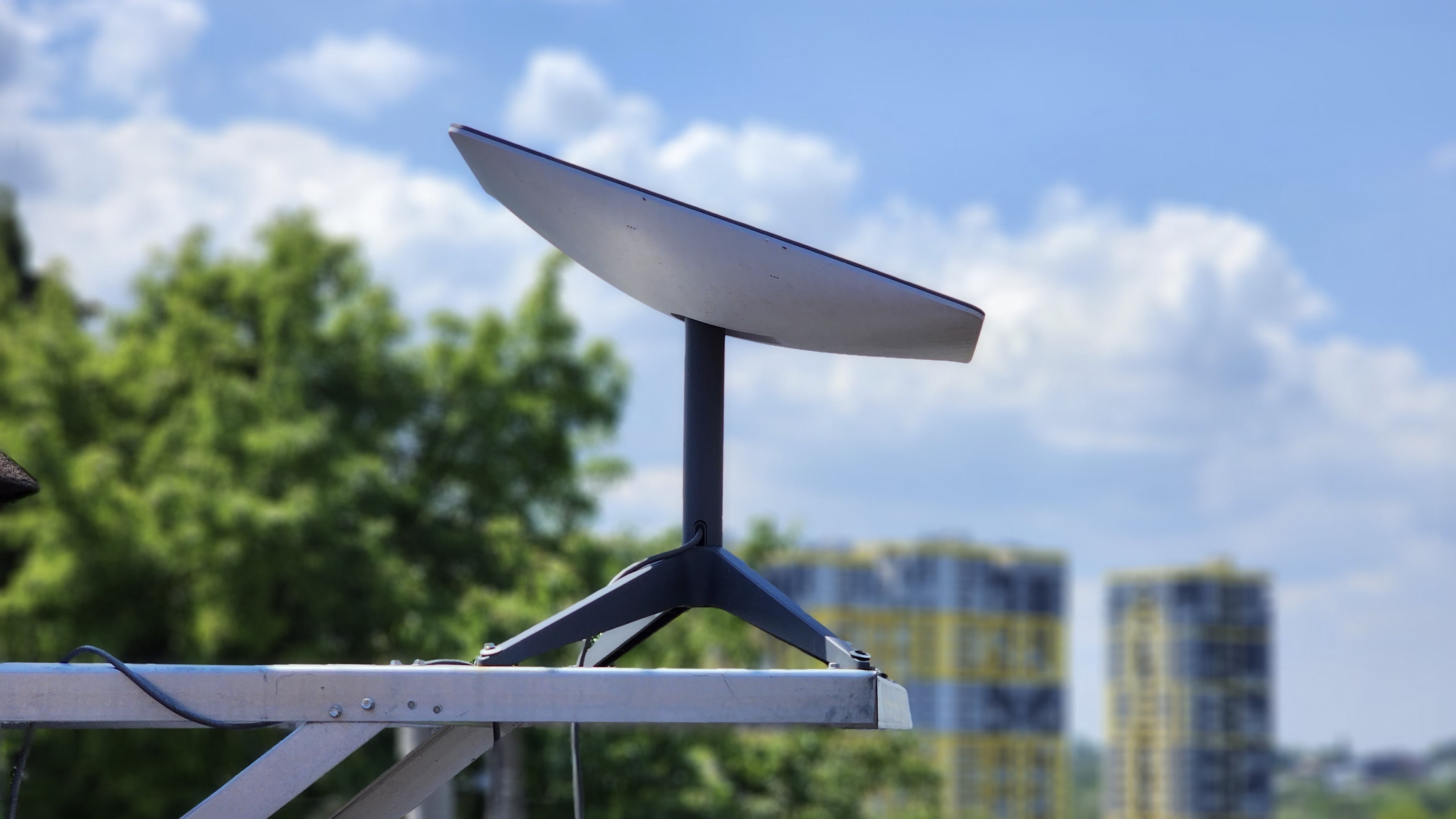
A Starlink terminal sat on a metal platform

(Image credit: Unsplash / Evgeny Opanasenko)

Comparing this new breakthrough to Starlink reveals a few key differences. First, data transmission speeds reaching up to 1Gbps are not something that Starlink can currently achieve; in our Starlink review, we found that the average for downloads sat at 71Mbps, and Starlink itself promises to deliver between 25 to 100 Mbps on the Standard plan. Second, signal strength and reduced errors in data transmission, despite the massive distance to the satellite, are both promising.

Cutting back on errors and snags in the connection is crucial for users who want to stream videos or send larger files. If this technology is ever made mainstream, we might be able to use the internet even in remote areas without having to compromise on what we can or cannot do. Goodbye, waiting for five minutes for that text to come through – we really wouldn't miss you.

But the implications here are huge, even if you think bigger than just having a reliable connection everywhere. Boosting signal speed, distance, and strength through this method of laser communication could spell great news for satellite navigation. It could even impact the ability to connect with space missions, such as with the ISS, more seamlessly and without delays.

Right now, this is just a proof of concept – an interesting achievement described in the Acta Optica Sinica journal. Let's hope that this picks up and gives Starlink a serious run for its money.

You might also like


source https://www.techradar.com/computing/wi-fi-broadband/forget-starlink-this-chinese-satellite-internet-tech-is-capable-of-1gbps-speeds-that-are-five-times-faster

This $1,999 smartphone is the closest 'Made in USA' cellphone right now, but it's no match for Android


  • Built in California, powered by Linux, the Liberty Phone says no to tech giants
  • With no Android or iOS, it’s the loneliest smartphone on the market today
  • It costs more, does less, and still claims to be the best smartphone for privacy

Despite rising political pressure to bring tech manufacturing back to the US, building a premium smartphone domestically remains a costly and technically difficult challenge.

The Liberty Phone by Purism, priced at $1,999, offers a rare example of how close a company can get to building an America-made device, but it comes with significant trade-offs in performance and practicality.

Unlike the widely promoted but questionable $499 Trump Phone, the Liberty Phone is at least verifiably assembled in the US, although it lacks flagship-level features.

Still not 100% "Made In USA!"

Todd Weaver, Purism’s founder, is upfront about the limitations, noting, “Someone who needs a wicked-strong camera is not our audience.”

Weaver estimates the Liberty Phone costs around $650 to produce, higher than the iPhone 16 Pro Max, which TechInsights says costs about $550 to build in China.

This discrepancy is driven largely by US labor costs, with savings made by using lower-spec components such as a basic camera and a low-resolution screen.

This may suit its core user base, including security geeks, older users, kids, and those who want to distance themselves from major tech brands, but it is nowhere near mainstream Android alternatives - for anyone expecting the best smartphone for business or multimedia tasks, the Liberty Phone is unlikely to compete.

Part of Purism’s appeal lies in its transparent and partially domestic supply chain - the motherboard is built at the company's California site, the chip is sourced from NXP’s Austin, Texas, facility, and the final assembly is local.

But some critical components, like the camera from South Korea and the display and battery from China, still depend on global sourcing.

“There are just some parts that don’t yet have a supply chain,” says Weaver. “We’re gonna keep incrementing there until we can get to that point.”

It runs PureOS, a Linux-based operating system that supports basic tasks like calling, texting, and web browsing, but without support for Android or iOS apps, it’s a hard sell for anyone needing a broad app ecosystem or high-end performance.

Nonetheless, Weaver believes a niche market exists and claims that about half of Purism’s customers are US government agencies.

Even though tariffs might someday narrow the cost gap, the continuity of this project is not certain.

“We don’t have factories here building application processors, high-end displays or most of the other things in your smartphone,” said Jeff Fieldhack of Counterpoint Research, showing his skepticism.

At the moment, the Liberty Phone is more of a philosophical gesture than a practical solution, and only Americans or those loyal to the US will give it a second look.

Via Wall Street Journal

You might also like


source https://www.techradar.com/pro/this-usd1-999-smartphone-is-the-closest-made-in-usa-cellphone-right-now-but-its-no-match-for-android

This dangerous new malware is hitting iOS and Android phones alike - and it's even stealing photos and crypto


  • Malware-ridden apps are sneaking on to official app stores
  • SparkKitty will steal photos to crack into your crypto wallet
  • One infected app was downloaded over 10,000 times

A dangerous new malware strain targeting smartphone users has managed to sneak on to both the Google Play Store and the Apple App Store without being detected, experts have warned.

SparkKitty was first spotted by cybersecurity experts at Kaspersky in January 2025, and uses optical character recognition to scan through your photos and harvest cryptocurrency wallet recovery phrases.

Most crypto currency exchanges will tell a user to write down a memorable phrase when creating an account for recovery purposes, but many users will simply screenshot their memorable phrase - making it super easy for SparkKitty to steal.

Snooping through photos and stealing crypto

Kaspersky says the SparkKitty malware has been actively distributed across both the Google Play Store and Apple App Store since February 2024, and has also been distributed through unofficial means as well.

The infected apps have since been removed from both app stores.

In many cases, the apps appeared to be legitimate and were designed for numerous purposes. One infected app called SOEX was downloaded over 10,000 times on the Google Play Store, and appeared to be a messaging app with cryptocurrency trading and exchange features - the perfect disguise for a malware designed to target cryptocurrency wallets.

Once installed on a user's device, the app will ask for permission to access and modify the image library on both iOS and Android devices. After being granted access, the app then scans the image library and will re-scan if it detects modifications being made to the image library, such as new images being added or deleted.

Obviously, outside of the threat to crypto wallets there is the threat of users being extorted using other images that could be found in their image library, but there is no evidence of this happening so far.

Hackers are constantly developing new tactics to hide their malware on applications that can be distributed through trusted platforms such as the Apple App Store and Google Play Store.

Always remember to double check that the application you are downloading is made by a trusted developer, is definitely the authentic version of the app you are looking for, and has trustworthy reviews. If in doubt, don’t download it.

Also be wary of apps that ask for more permissions than they actually need, or apps that request permission to create new configuration profiles and certificates. Finally, when creating a memorable phrase for recovering an account, don’t keep it stored where it can be easily stolen.

Many of the best cloud storage services and best password managers offer encrypted storage vaults for storing important phrases.

You might also like


source https://www.techradar.com/pro/security/this-dangerous-new-malware-is-hitting-ios-and-android-phones-alike-and-its-even-stealing-photos-and-crypto

EU Court gives the Dutch the green light to pursue Apple App Store anti-trust case

The European Court of Justice says the Netherlands can go after Apple over its App Store commissions. source https://www.techradar.com/pro...